

Beryllium - Be
Beryllium (Be) is a lightweight, silver-grey metal in group 2 of the periodic table. It is used in specialised alloys, electronics, aerospace components and scientific equipment.
Properties and occurrence · Uses · Health and safety · Environment and water
| Atomic number | 4 |
|---|---|
| Standard atomic weight | 9.0121831(5) |
| Electronegativity (Pauling scale) | 1.57 |
| Density at 20 °C | Approximately 1.85 g cm−3 |
| Melting point | 1287 °C |
| Boiling point | 2468 °C |
| Non-bonded atomic radius | 0.153 nm |
| Common oxidation state | +2 |
| Stable isotope | 9Be |
| Electron configuration | 1s22s2, or [He] 2s2 |
| First ionization energy | 899.5 kJ mol−1 |
| Second ionization energy | 1757.1 kJ mol−1 |
| Discovery | Louis Nicolas Vauquelin, 1798 |
Property sources: Royal Society of Chemistry and CIAAW. Standard atomic weight is dimensionless; the corresponding molar mass is approximately 9.01218 g mol−1. The number in parentheses expresses uncertainty in the final digit.
Properties and occurrence of beryllium
Beryllium has atomic number 4 and one stable isotope, 9Be. Radioactive isotopes also exist, so “one stable isotope” does not mean that only one isotope is known. Its common oxidation state in compounds is +2.
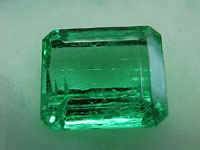
The main commercial minerals are bertrandite and beryl. Emerald and aquamarine are varieties of beryl, a beryllium aluminium silicate. Beryllium occurs naturally in rocks and soils, rather than as free metal in ordinary mineral deposits.
The metal can react with strong acids and strong bases, releasing flammable hydrogen. Powder and finely divided particles have different handling risks from solid components and can form explosive dust mixtures in air.
Uses of beryllium
Beryllium-containing alloys are used for components that need combinations of strength, spring performance, conductivity and dimensional stability. Applications include electrical contacts, precision instruments and aerospace equipment. Beryllium metal, beryllium alloys and beryllium oxide ceramics are different materials and should not be treated as interchangeable.
Beryllium's low absorption of X-rays makes it useful for X-ray windows. It is also used in specialised optical and nuclear applications. Beryllium oxide is used in technical ceramics where thermal performance is important.
The USGS Mineral Commodity Summaries 2026 identifies consumer electronics, aerospace and defence, industrial components and automotive electronics among the principal US end-use sectors. Alloy products account for much of the processed material used across these sectors.
Health effects and safe handling of beryllium
Exposure to beryllium-containing dust, fumes, mist or solutions requires careful control. Occupational exposure can cause sensitisation, chronic beryllium disease and lung cancer. Cutting, grinding, machining or other operations that generate airborne material can create exposure risks even when the finished component appears solid and stable.
- Beryllium sensitisation: the immune system develops a specific response to beryllium. Sensitisation may occur without symptoms and can follow skin or inhalation exposure.
- Chronic beryllium disease (CBD): also called berylliosis, this is an immune-mediated lung disease associated with inhaled beryllium in sensitised individuals. It may develop months or years after exposure. Symptoms can include breathlessness, coughing, fatigue and weight loss; progression varies.
- Cancer: beryllium and beryllium compounds are recognised human carcinogens. Occupational inhalation exposure is associated with lung cancer.
High airborne concentrations can also cause acute lung injury. Exposure assessment, suitable engineering controls, hygiene, protective equipment and medical surveillance should follow the applicable occupational requirements and the material's safety data sheet. An occupational-health professional should assess suspected exposure or symptoms.
Risks depend on the material, exposure route, concentration and task. A general mortality percentage is not an appropriate description of every case of CBD, and a drinking-water limit must not be used as an airborne-exposure limit.
Beryllium in the environment and water
Weathering of rocks and soils, atmospheric deposition and industrial activities can introduce beryllium into the environment. It does not degrade as an element, although its chemical form and distribution change. It is often associated with particles, soil and sediment, but groundwater contamination is possible.
Water chemistry matters: the low solubility of some beryllium oxides and hydroxides often limits dissolved concentrations at ordinary environmental pH. This does not mean that beryllium always becomes harmless or cannot enter groundwater. Changes in pH, turbidity and chemical conditions can affect its occurrence and mobility.
Drinking-water limits and treatment
In the United States, the EPA maximum contaminant level for beryllium in public drinking water is 0.004 mg/L (4 µg/L). This is a US regulatory value, not a universal international limit. WHO has not established a formal drinking-water guideline value because beryllium is rarely found at concentrations of health concern; this is not a statement that all concentrations are safe.
EPA identifies activated alumina, ion exchange, lime softening, coagulation/filtration and reverse osmosis as treatment options for beryllium. Selection depends on the water composition, beryllium concentration and form, pH, and the required finished-water quality. Removal performance should be verified for the specific water rather than assumed from the element name alone. Treatment also transfers contaminants into residuals such as sludge, concentrate or spent media, which need appropriate management.
Read more about water and water-treatment fundamentals.
Beryllium page last reviewed: by Lenntech.
Back to the periodic table of elements.
Sources and further reading
- RSC: beryllium properties, applications and history.
- CIAAW: beryllium atomic weight and isotopes.
- USGS: Mineral Commodity Summaries 2026 — beryllium (PDF).
- OSHA: sensitisation, chronic beryllium disease and cancer.
- ILO/WHO: International Chemical Safety Card 0226 — beryllium.
- ATSDR: beryllium in the environment and exposure.
- EPA: National Primary Drinking Water Regulations.
- WHO: beryllium drinking-water fact sheet.
- EPA: treatment-technology feasibility for chemical contaminants (PDF).