

Lutetium - Lu
Lutetium (Lu)
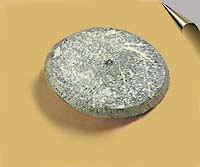
Lutetium is a hard, dense, silvery-white lanthanide metal. It is one of the least abundant lanthanides and is recovered from rare-earth minerals during the separation of mixed rare-earth materials.
| Atomic number | 71 |
|---|---|
| Standard atomic weight | 174.96669 |
| Electron configuration | [Xe] 4f14 5d1 6s2 |
| Density | 9.84 g/cm3 |
| Melting point | 1663 °C |
| Boiling point | 3402 °C |
| Common oxidation state | +3 |
Uses and applications
Lutetium oxide is used in some catalysts, including catalysts for hydrocarbon processing. The radioactive isotope lutetium-177 is used in targeted radionuclide therapy, while lutetium-containing crystals are used in medical imaging detectors.
Lutetium and water treatment
Lutetium is not a routine water-treatment chemical. It may be present in process waters and residues from rare-earth mining, refining, or recycling. Management requires characterisation of the specific dissolved and particulate forms.
Occurrence and environmental context
Lutetium is recovered from rare-earth minerals, commonly through processes that separate chemically similar lanthanides. Environmental behaviour depends on its chemical form, solubility, and interactions with minerals and dissolved substances in water and soil.
Health and safety
Health risks depend on the particular lutetium compound and exposure route. Avoid inhaling dust, consult the relevant safety data sheet, and use appropriate occupational controls when handling metal or compounds.
Back to the periodic table of elements
Sources and further reading
Element page last reviewed: 24 October 2026 by Lenntech.